
 Theranostics, also called radiotheranostics, combines targeted disease diagnosis and therapy into an integrated medical process for oncology providers. Although the field isn’t new and dates back to the 1940s, FDA approvals and big market growth projections have reinvented the method and increased its adoption across cancer centers. So, while its foundation is well established, many organizations are still navigating the practical realities of launching and growing a theranostics program.
Much of the growing interest stems from the ability of theranostics to pair precision imaging with targeted radiopharmaceutical therapies, allowing clinicians to personalize treatment and deliver therapy directly to cancer cells while limiting radiation exposure to surrounding healthy tissue. By treating exactly what is visible, patient success rates are highly encouraging and can strengthen oncology service lines which supports participation in clinical research opportunities and prepare for future radiopharmaceutical therapies.
During a recent Siemens Healthineers webinar, leaders from Nebraska Cancer Specialists shared lessons learned from building and expanding their own theranostics program. Their experience highlights that successful programs are about far more than adding a new therapy.
Keep reading for the top five takeaways from the discussion.
Starting Small: The Nebraska Cancer Specialists Theranostics Program
Nebraska Cancer Specialists began its journey in 2014 with a single room that served as both a treatment space and hot lab. In 2021, as patient demand and program capabilities grew, the organization expanded into dedicated treatment and radiopharmaceutical preparation areas and added PET/CT imaging. Later in 2023, they incorporated SPECT/CT to support dosimetry and clinical trial participation. Today, the practice operates a fully integrated theranostics and imaging program that combines imaging, therapy and clinical research under one roof.
Rather than launching a large-scale operation from day one, Nebraska Cancer Specialists took a slow but steady pace, starting with one to two therapies, developed standardized workflows, built strong interdisciplinary partnerships and expanded capabilities as needed.
This phased approach set them up to create a scalable foundation that supports not only current standards of care but also opportunities in dosimetry, advanced imaging and radiopharmaceutical clinical research.
Lesson #1: Expanding Access Starts in the Community
The webinar kicked off with the growing role community oncology practices can play in delivering theranostics. Anywhere from 75 to 85% of oncology care is delivered in the community oncology settings.
For many patients, receiving care close to home can reduce travel burdens, simplify scheduling and improve the overall treatment experience. As radiopharmaceutical therapies become more widely available, community providers have an opportunity to bring advanced care options to patients who may have previously needed to travel to large academic medical centers.
Expanding access is a critical component of ensuring patients can receive timely, coordinated care throughout their cancer journey, which is already a heavy experience to carry.
As demand for theranostics continues to grow, organizations that invest in local access may be better positioned to meet the needs of both patients and referring providers.
Lesson #2: Building a Theranostics Program Requires More Than Adding a Therapy
The oncology organization also shared that theranostics should not be viewed as just another treatment service line.
Unlike many traditional oncology therapies, theranostics relies on the integration of imaging, treatment delivery, radiation safety, pharmacy support, nursing and physician collaboration. Success depends on creating a coordinated framework that brings all of those elements together.
They suggested that foundational program components include:
- Physician leadership
- Medical oncology collaboration
- Nuclear medicine expertise
- Nursing support
- Pharmacy involvement
- Radiation safety oversight
- Health physics support
- Standardized workflows
Organizations that approach theranostics as a multidisciplinary program rather than a standalone treatment may also be better equipped to scale services over time.
Lesson #3: Patient Navigation Can Make or Break the Experience
While much of the industry conversation centers on the technology, another repeatedly highlighted critical factor was care coordination.
At Nebraska Cancer Specialists, a dedicated nurse case manager plays a central role in their patient success.
This manager often serves as the primary point of contact for patients, referring physicians, and internal care teams. Responsibilities may include scheduling appointments, coordinating treatments, answering questions and helping patients navigate complex care pathways.
Effective coordination is crucial as theranostics programs grow. Without a clear process and defined ownership, communication gaps can create delays and challenges for both patients and providers.
Advanced technology may drive treatment, but people drive the patient experience.
Lesson #4: Imaging Should Be Part of the Strategy
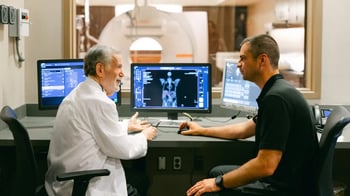
Nebraska Care Specialists have a vertically integrated theranostics program which includes imaging. They have found better theranostics care with in-house imaging, powered by advanced technology from Siemens Healthineers, interpreted by experienced nuclear medicine physicians and radiologists.
The value of imaging technology such as PET/CT, SPECT/CT, CT and molecular imaging extends well beyond diagnosis. Throughout the patient journey, imaging supports:
- Patient selection
- Disease characterization
- Treatment planning
- Response assessment
- Long-term monitoring
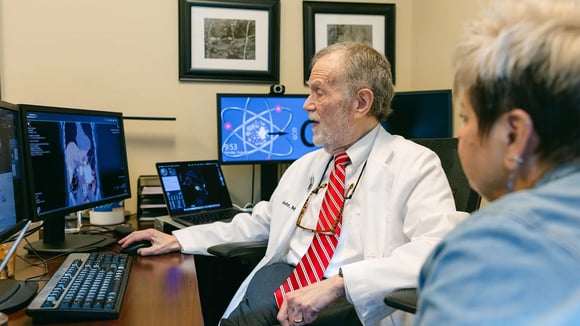
Samuel Mehr, MD, director of Nuclear Oncology at Nebraska Cancer Specialists, and Glenda discuss results of the theranostics treatment.
Read a patient story from Nebraska Care Specialists on how Glenda, a 61-year-old woman who was diagnosed with neuroendocrine tumors, turned to the team for personalized therapy and coordinated care during her theranostics treatment.
Organizations evaluating future program growth may benefit from considering how imaging capabilities can support both current and emerging radiopharmaceutical therapies.
Lesson #5: Thinking Beyond Today's Therapies
While current theranostic applications were discussed throughout the webinar, Nebraska Cancer Specialists also looked ahead to what comes next.
One area of particular interest is dosimetry, which measures and calculates the radiation energy absorbed by tumors and healthy organs to maximize treatment efficiency while minimizing toxic side effects. This helps providers better understand how radiopharmaceuticals are distributed throughout the body and how patients respond to treatment. These personalized approaches to dosing and treatment assessment can play an important role as the field grows.
They also pointed to innovation in radiopharmaceutical development, additional cancer targets and expanding clinical applications as areas to watch.
Building Your Own Theranostics Program 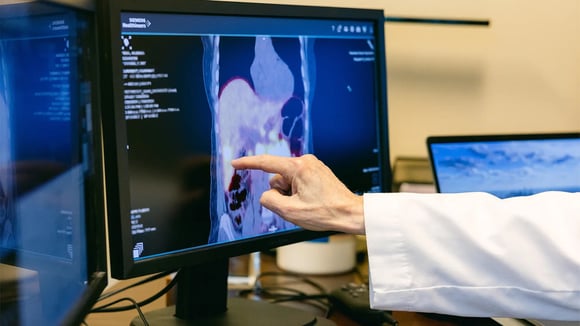
Nebraska Cancer Specialists’ successful theranostics programs came to life by expanding access, creating multidisciplinary workflows, supporting patients through dedicated care coordination and integrating imaging into clinical decision-making.
Organizations can learn from them and other organizations and invest in these foundational elements to be better positioned to deliver advanced care closer to home.
Whether you're evaluating your first theranostics program or planning for future expansion, Cassling is happy to support your journey. Connect with us today!



Comments