
- Remote MRI scanning enables qualified technologists to operate scanners from another location while on‑site staff manage patient care.
- Updated IAC standards require an on‑site registered MRI technologist and clear contingency plans.
- Demand and staffing pressures are driving adoption, helping departments maintain throughput, quality and consistency across sites without adding full‑time technologists.
- Siemens Healthineers's WeScan offers a turnkey model with trained Siemens Healthineers technologists, secure connectivity and standardized protocols to provide reliable coverage and real‑time collaboration.
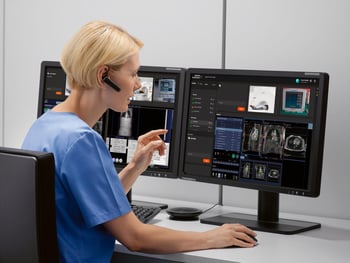 If you’ve read our blog on the latest in MRI technology, you’d probably agree that the future is looking bright for imaging technologists and patients alike.
However, as a result of that technology becoming more and more innovative, MRI demand is not slowing down, and experienced technologists are getting harder to recruit and retain. At the same time, patients expect faster access and results, and hospital leaders expect imaging departments to keep up regardless of staffing shortages.
That’s why remote MRI scanning has become a hot topic in imaging operations. The practical, secure and scalable model can improve access to care and outcomes, and Siemens Healthineers’s WeScan service is already leading the way.
What is Remote MRI Scanning?
Remote MRI scanning is the practice of having a qualified MRI technologist operate an MRI scanner from another location using secure, real-time software. On-site staff take care of patient screening, positioning, coils and safety while a remote technologist controls the console, plans slices, adjusts parameters and runs sequences.
The American College of Radiology describes it as a way to extend technologist expertise and support consistent protocols across sites, especially in rural or understaffed locations.
In November 2024, the Centers for Medicare & Medicaid Services (CMS) approved updated Intersocietal Accreditation Commission (IAC) Standards and Guidelines that specifically address remote scanning and the use of portable MRI scanners.
One of the highlighted changes is the requirement that a registered MRI technologist must remain with the patient at all times during a remote scan. This ensures that qualified personnel are physically present to manage patient care, safety and immediate needs.
To achieve accreditation under the new standards, facilities offering remote MRI scanning services must implement policies that address:
- Equipment or communication failures
- Internet stability or bandwidth interruptions
- Power outages and contingency planning
- Clear division of responsibilities between on-site and remote personnel
Imaging providers must also continue to meet all existing standards for local MRI operations. It’s important to remember that remote scanning doesn’t replace traditional safety requirements or on-site professionals.
Why Are Imaging Departments Using Remote MRI Scanning?
The appeal of remote MRI scanning is rooted in its ability to help solve long-standing operational challenges. Staffing shortages or not, departments often struggle to meet community needs during evenings, weekends and unexpected surges. This may lead to increased pressure to get patients in and out of the exam room as quickly as possible. Rushed procedures can result in missed steps, inconsistent protocol reports, low image quality, repeat scans and more.
Remote MRI scanning offers a way to stabilize operations without adding full-time staff. It also creates new opportunities for on-site technologists to learn from remote experts in real time, something that hasn’t historically been common or even possible.
For patients, the benefits include shorter wait times, fewer transfers and less travel with MRI services available close to home with lower wait times.
Siemens Healthineers WeScan: How Does it Work?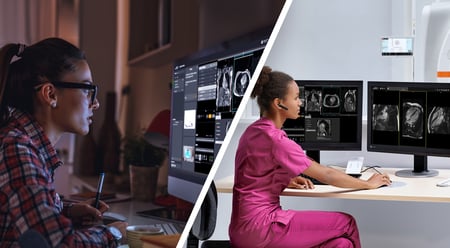
Siemens Healthineers’s WeScan service takes the concept of remote MRI scanning and turns it into a turnkey solution. Instead of building an internal remote-scanning program, health systems can tap into Siemens’s pool of MRI technologists on a pay-per-hour basis.
This model is valuable for organizations that want reliable coverage and consistent quality and performance without the lengthy process of hiring, onboarding and scheduling additional technologists.
WeScan includes:
- Remote Siemens Healthineers technologists trained specifically on Siemens Healthineers MRI systems
- Secure connectivity through Smart Remote Services, syngo Virtual Cockpit and TeamViewer
- Full remote operation of the MRI console
- Protocol standardization across all connected sites
- Real-time collaboration with on-site staff
For Siemens Healthineers MRI customers, WeScan can fit naturally into existing workflows and cybersecurity frameworks.
The Benefits of Remote MRI Scanning
Remote MRI scanning, and WeScan in particular, can deliver value across multiple dimensions of imaging operations:
- Flexible staffing becomes achievable without adding full-time workers. When a technologist calls in sick or a schedule fills up, remote support can step in to keep the day moving. This reduces cancellations, protects revenue and keeps patients on track with their care plans.
- Consistent image quality is another major advantage. Because Siemens Healthineers technologists follow standardized protocols, health systems see less variation between sites and fewer repeat scans. Radiologists benefit from predictable, high‑quality images regardless of where the exam was performed.
- Extended hours become more realistic. Many imaging departments want to offer evening or weekend appointments but can’t justify the staffing. Remote MRI scanning can make those hours possible without the burden of additional shifts and technologist burnout.
Most importantly, patients can benefit from faster access, fewer delays and reduced need to travel for advanced MRI exams.
Implement Remote MRI Scanning Today
Remote MRI scanning offers a secure, scalable model that strengthens operations without compromising safety or the human touch that patients rely on.
With services like Siemens Healthineers’s WeScan, imaging departments may be able to extend coverage, standardize protocols and deliver consistent, high‑quality exams across every site in their network. On‑site technologists can gain real‑time support and patients may experience shorter wait times and more convenient access to care, a win-win for all.
To learn more about getting started with remote MRI scanning, contact us today!




Comments