Every year, we hold our Investing in You (IIU) educational seminar in Omaha, Nebraska, hosting imaging professionals from across the Midwest. For those unfamiliar, this in-person event is an extension of the Investing in You continuing education program that runs throughout the year. Our monthly and on-demand webinars...
Read more
The newest and most innovative women's health products from Siemens Healthineers are coming to the Midwest! The 18-wheel Siemens Mobile mammography truck is bringing the new systems, and you're invited to get an intimate glimpse.
Read more
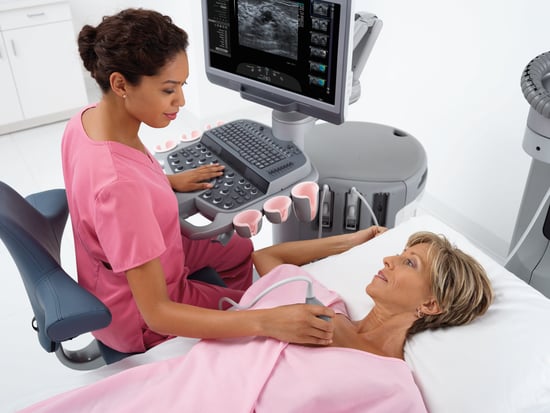
3D Total Breast Ultrasound combines the power of 2D/3D ultrasound and advanced technologies with automated acquisition and intelligent workflow solutions to create one comprehensive package for ultrasound breast care.
Read more
As a woman working in the imaging field, I was thrilled when the Food and Drug Administration proposed new rules related to how patients are notified of their breast density. I’ve seen firsthand the benefits of breast density testing and its impact on long-term patient wellbeing.
Read more
It’s 2019, and that means providers across the country are officially coping with the ramifications of the changes made to breast imaging reimbursement codes. Has your facility updated its billing procedures and internal systems? If not, it’s important to do so as soon as possible so you can avoid submission delays and...
Read more
Wikipedia defines Artificial Intelligence (AI) as “intelligence demonstrated by machines, in contrast to the natural intelligence displayed by humans and other animals.” Although AI already has a limited presence in medical imaging systems, the development of self-learning computer programs has created excitement and...
Read more
This past April, Nebraska became the 32nd state to pass a law related to breast density notification. Beginning on July 24, 2017, all physicians throughout the state became required to inform their patients when a mammogram detects the presence of dense breasts. In enacting Cheri’s Law, so named after a breast cancer...
Read more
It’s Breast Cancer Awareness Month, which means many of you are hosting women’s health wellness fairs and advertising your mammography services in local papers and magazines. One thing I hope you are also doing is setting aside some time to celebrate and take care of your mammographers. As front-line healthcare...
Read more
In part one of his blog, Gerald Kolb laid out the history of the USPSTF guidelines for mammography and shared referral patterns from recent studies of the guidelines. In this second and final part, he makes the case for advocacy and personalized care in order to maintain mammography volume and department revenue. Here’s a...
Read more
For more than 20 years, breast imaging providers have worked to familiarize women with the concept of annual mammography screenings starting at age 40. Many of you will remember the “hiccup” in 2009 when the U.S. Preventive Services Task Force’s recommendations left the decision for women age 40-49 up to the patient and...
Read more
Breast cancer is the most common cancer among women worldwide, and when it comes to finding cancer—the sooner the better. There has been some debate in the women’s health community about what the right age is for women to start undergoing breast cancer screenings. Many recommend that women of higher risk (which includes...
Read more
The U.S. Preventive Services Task Force (USPSTF) recently updated their 2009 breast cancer screening guidelines from recommending women of average risk aged 40 or older undergo screening every one to two years, to now recommending women of average risk aged 50 to 74 undergo screening every other year. Average risk...
Read more
One in eight American women will develop invasive breast cancer over the course of her lifetime. Thankfully, most women are aware of the importance of regular mammography screenings when diagnosing breast cancer.
Read more