
 MRI scans can be a stressful experience for patients of any age. The loud sounds, the confined space, the required stillness…it’s a lot, even under the best circumstances. And as any seasoned technologist will tell you, capturing the perfect images involves a combination of precise instruction and compassionate coaching.
But what if the patient can’t hear you? It adds an entirely new layer of anxiety and uncertainty to an already overwhelming experience.
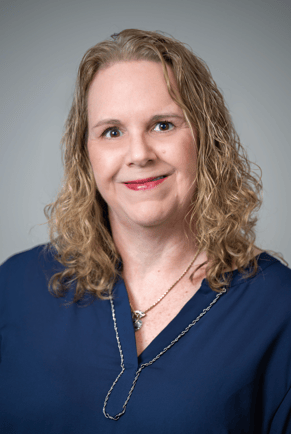
At Children’s Health in Plano, Texas, MRI Safety Officer Tammy Elliot saw this challenge first-hand, not only as a technologist, but as the wife of someone who is functionally deaf. That personal insight sparked an innovation that is now transforming the MRI experience for patients across the Plano community while inspiring other healthcare organizations along the way.
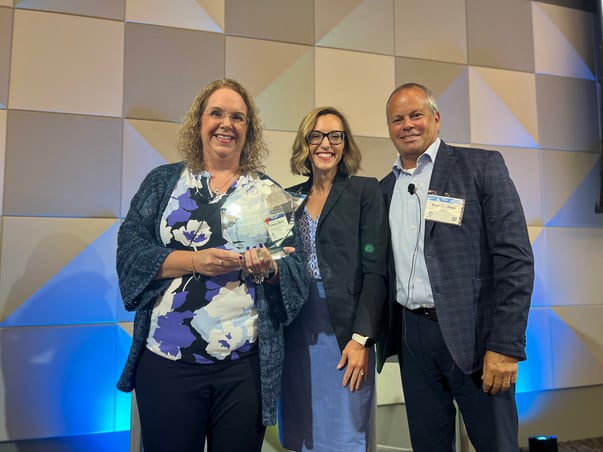
Tammy and her team at Children’s Health were recently crowned the winners of Cassling’s inaugural Imaging for Impact award. Read on to find out how they took a complex problem and turned it into an opportunity to provide more inclusive, compassionate care.
Seeing the Problem Clearly
When her husband needed an MRI, Tammy became acutely aware of the communication gap that hearing-impaired patients face during a scan. Due to MRI safety concerns, patients are required to remove their hearing aids before entering the MRI suite. With interpreters not permitted in the room, communication is limited, leaving deaf patients particularly vulnerable to confusion and discomfort.
“Try giving breathing instructions to a person who can’t hear anything,” said Tammy. “It’s impossible.”
She explained that an MRI is a highly interactive exam that requires a significant amount of coaching. Technologists talk patients through breathing instructions, tell them how much time is left and, most importantly, reassure them about what’s normal and ask about possible discomfort. When a patient can’t hear or understand those cues, they lose that crucial support.
“If you don’t have a way to communicate with [the patients], you can’t tell them, ‘This is normal,’” said Tammy. “Or, ‘You have five minutes left in the exam,’ whatever the case may be. That’s why I wanted a visual way to communicate with them.”
An Innovative Idea Meets the Right Partner
Tammy knew there had to be a better way to serve deaf and hard-of-hearing patients, so she turned to the team at Nordic NeuroLab, a company that develops specialized hardware and software to improve MRI experiences. Tammy asked Nordic’s systems trainer if they were capable of providing visual cues.
Even though the initial answer was “no”, her contact reached out to a developer at Nordic to see if they could create a solution. The developer worked together with Tammy and the team to create a novel visual communication tool.
The first-of-its-kind solution—fully compatible with the hospital’s Siemens Healthineers MRI system— allows technologists to type messages directly to the patient’s screen and display a countdown timer for scan sequences. The tool not only creates efficiencies, enhances safety, and improves outcomes, it promotes equity while placing the patient squarely at the center of care.
Inclusive Healthcare for Better Outcomes
The innovative solution’s impact has been immediate, with families say the visual communication helps reduce fear and uncertainty and patients feeling safer and less isolated.
“People want to be heard and don’t want to be isolated,” said Tammy. “People with hearing impairments tend to be isolated because they can’t hear. This helps take that barrier away.”
Technologists have reported smoother, more efficient exams, and the data backs their claims. Patient experience scores for Children’s Health MRI services rose from 79.9% in 2024 to 85.9% as of March 2025.
Tammy says the focus on providing inclusive care doesn’t stop there.
Children’s Health also recognized another challenge: many fabrics used in hijabs contain metallic threads that can pose safety risks in MRIs.
“We want to recognize cultural traditions, yet keep the patient safe,” said Tammy. “So we did that by sourcing disposable hijabs.”
It’s yet another example of how the team at Children’s Health thinks holistically about the patient experience.
A Community of Problem-Solvers
Tammy’s commitment to patient-centered innovation extends beyond her hospital. Recognizing that the problems Children’s Health faces are not isolated, she’s created a working group that meets quarterly to shine a light on issues and innovations across institutions.
“It’s funny because a lot of the things I hear are the same things we are dealing with,” said Tammy. “And you don’t realize that when you’re in it. Those problems are happening across the country.”
Creating Lasting Impact through Belonging
What started as the question — “How do we communicate with patients who can’t hear?” — has become a framework for more inclusive, compassionate care.
Children’s Health is proving that innovation doesn’t always require state-of-the-art technology or million-dollar breakthroughs. Sometimes it begins with understanding basic human needs, asking the right questions and caring enough to design the right solution for those who may otherwise go overlooked.
Tammy explains that patients need to feel love and belonging just as much as safety and security to receive optimal care.
“You want people to feel that,” said Tammy. “That’s why we go into healthcare, so we can make people better, not just on a physical level, but an emotional level too.”



Comments