

At this year’s Radiological Society of North America (RSNA) meeting in Chicago, the energy was undeniable as thousands of radiologists, technologists and other medical professionals came together to explore the latest innovations shaping the imaging field.
One theme kept coming up again and again: artificial intelligence (AI). AI continues to push boundaries, and it was front and center in dozens of conversations I had with customers. Walking the floor with my team, we were struck by the demonstrations from Siemens Healthineers; watching this technology in action proved just how essential AI and other advancements have become to women’s health, cardiac care and more.
Here are the highlights that captured the most attention.
The Growing Power of AI
AI has become the driving force behind the newest radiology technology, so it’s no surprise that more than 200 companies demonstrated AI and machine-learning solutions at RSNA.
Jen Philo, a Cassling Account Executive in Dallas, Texas, explained how this technology is having a real-world impact.
“Several radiologists shared the challenges they face with workflows, particularly the time‑consuming nature of voice dictation, which often results in unorganized reports that require significant effort to sort and finalize,” said Jen. “With the ongoing shortage of radiologists, they were eager to learn about new solutions that could ease these burdens. What they want is a platform that prioritizes cases from urgent to routine so they can better focus their time and streamline their workflow.”
Our partners at Siemens Healthineers showcased a variety of advanced features. While AI in imaging plays an important role in making a positive impact on workflow efficiencies such as throughput, it’s also redefining image quality.
The new Siemens Healthineers AI-powered imaging chain was designed to deliver higher quality low-dose images for precise image-guided procedures.
Optiq AI uses an AI-based algorithm to reduce the noise from an imaging system during image formation in real time. In some cases, you might have needed to increase the radiation dose to get the proper results, but with Optiq AI, the system optimizes the parameter combination, allowing technologists to achieve ALARA without sacrificing quality or time.
One of the things I found most impressive about Optiq AI is how it takes the guesswork out of exam settings. Instead of manually adjusting every detail, the system automatically fine‑tunes factors like voltage, current, filtration, focal spot size, pulse width and detector dose. It even accounts for distance and collimation. And if the scanner is repositioned or the angle changes mid‑procedure, the settings update right away. It’s truly win-win.
This solution addresses several needs: increasing complex procedures, ensuring precision in early‑stage treatment for small anatomies and providing clear views for minimally invasive therapies.
I'm excited to hear from providers who begin to explore these AI features and discover the unexepected ways they improve patient care and streamline operations.
Another Step Forward in Women's Imaging
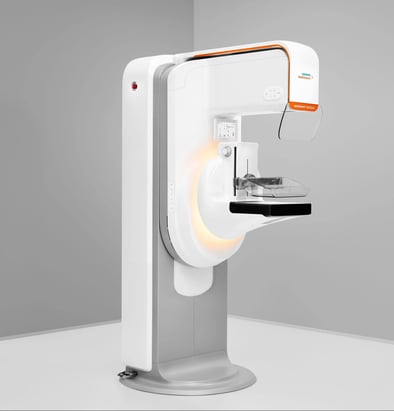 The MAMMOMAT B.brilliant mammography system from Siemens Healthineers has been all the buzz lately, and at RSNA, they introduced the machine’s newest capabilities.
The MAMMOMAT B.brilliant generates high-resolution 3D breast images via wide-angle tomosynthesis in only five seconds2. Pending FDA-approval, it will soon be equipped3 with ClearCEM, a newly developed, highly sensitive image reconstruction technique for contrast-enhanced examinations.
Siemens Healthineers shared that ClearCEM supports radiologists in identifying and characterizing suspicious findings with greater confidence by leveraging differences in contrast uptake between healthy and malignant tissue, as well as the distinct X-ray absorption properties of iodine versus breast tissue. The addition of these features typically aims to reduce unnecessary biopsies, but the good news is that ClearCEM also supports tomosynthesis‑guided biopsies when needed.
I’m particularly excited about this development because Cassling was deeply involved in the first MAMMOMAT B.brilliant installation in the United States. Our partners at GRACE Breast Imaging and Medical Spa in central Iowa recently became the first healthcare facility in the United States to adopt the MAMMOMAT B.brilliant, and we have all been impressed with its results.
“I don’t think there’s any way I would ever consider going back,” said Dr. Lamphiear, co-founder of GRACE Breast Imaging, on a Cassling blog featuring their story. “I don’t think I could even do it ethically to my patients and I want to be able to see what I see with the B.brilliant.”
With ClearCEM, I have no doubt that the MAMMOMAT B.brilliant is entering a new era of speed, precision and confidence. These advancements not only showcase the system’s modern capabilities but also point toward exciting applications that promise to further empower radiologists and improve women’s healthcare.
Non-Invasive Solutions Reshaping Cardiac Imaging 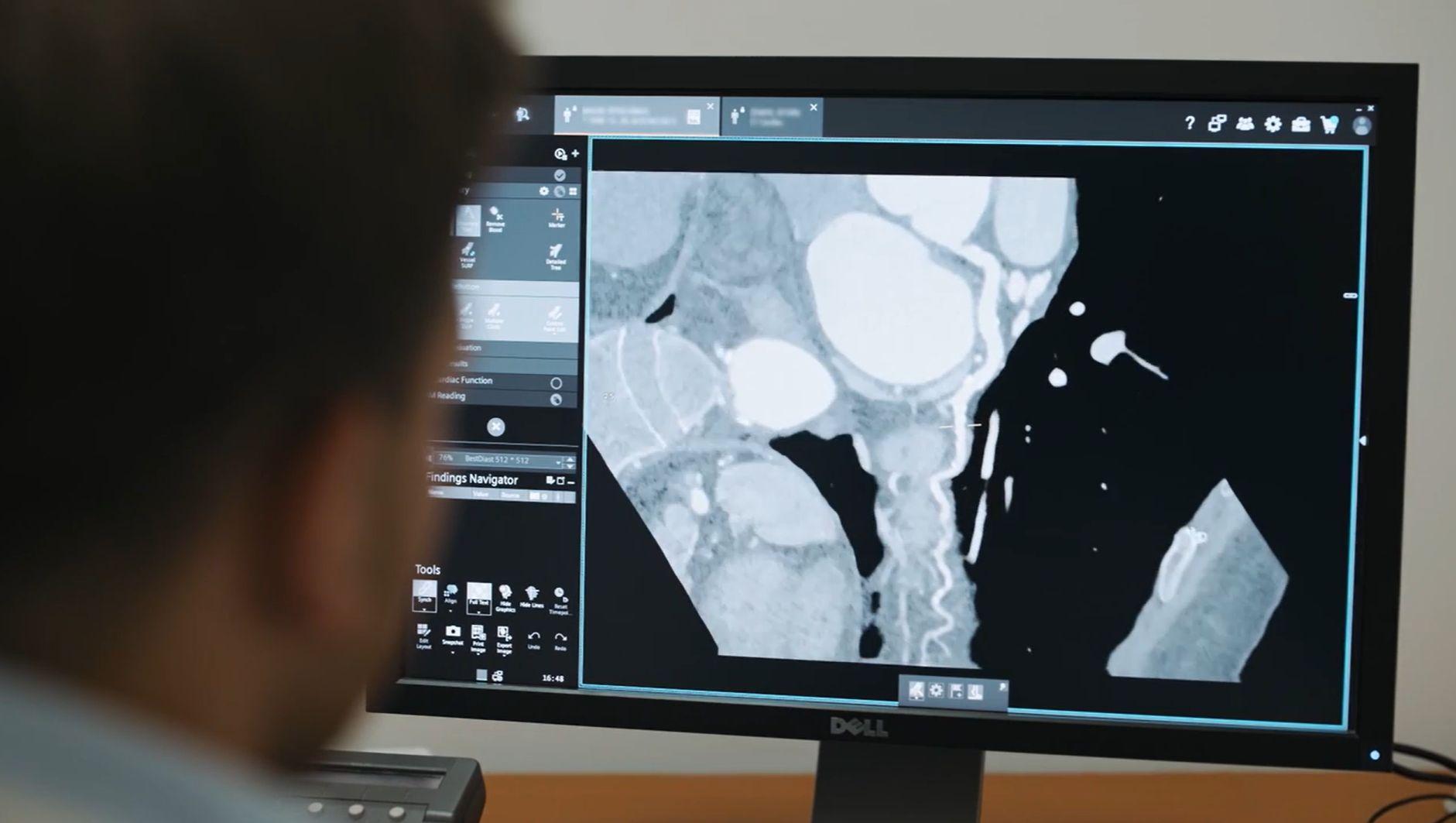
Lastly, Siemens Healthineers touched on cardiac imaging with their announcement of Syngo.CT Coronary Cockpit4, a new software solution within the Syngo.via5 platform designed to support the management of coronary artery disease (CAD) for both dual-source and photon-counting CT scanners. CAD is a leading cause of death around the globe, which further emphasizes the need for diagnostic and treatment planning tools that are both efficient and minimally invasive.
Syngo.CT Coronary Cockpit addresses this need with an AI-powered analysis giving radiologists clearer insights into plaque size, composition and distribution that build up in heart arteries. By utilizing the solution, unnecessary referrals to the cath lab for invasive diagnostic procedures can be reduced, which could cause emotional and physical distress to the patients.
While this incredible solution is not available quite yet in the United States, it represents a major step forward in cardiac imaging. Its ability to streamline diagnosis, reduce unnecessary cath lab referrals and support more confident treatment decisions could significantly improve outcomes for older patients who are most at risk.
Quick Bites
A few other things that caught my attention that I wanted to share, at least briefly:
- Theranostic Growth: Theranostics departments are becoming more and more common as providers recognize the need to provide individualized care in a setting built from the ground up to enhance diagnostic and therapeutic workflows.
- Goodbye Helium: We continue to see progress in MR systems with no or minimal helium, bringing down costs even as the images they provide get better each year with advances in technology.
- Hello Photon-Counting: The NAEOTOM Alpha family of CT scanners has brought photon-counting to the forefront of the imaging conversation. As more and more providers get to use this technology, we can no doubt look forward to a variety of groundbreaking clinical applications in the future.
See You Next Year
Attending RSNA 2025 was a reminder of just how far imaging has come and how much further it’s headed. The innovations on display give you a deep understanding of how valuable these advancements are for patients and providers. RSNA is also a special chance to connect with peers, learn from partners and share ideas.
I feel energized by the progress I’ve seen and grateful for the community that makes it all possible. I’m already looking forward to RSNA 2026 and the discoveries we’ll witness together.
1 Optiq AI, Artis icono.explore floor, and Artis genio floor are pending 510(k) clearance, and are not yet commercially available in the United States.
2 Data on file. For average breast size of 50/50 glandular/adipose tissue and 5 cm thickness.
3 ClearCEM with Mammomat B.brilliant VA11 is pending 510(k) clearance, and is not yet commercially available in the USA. Mammomat B.brilliant is not commercially available in all countries. Due to regulatory reasons its future availability cannot be guaranteed.
4 Syngo.CT Coronary Cockpit is pending 510(k) clearance and is not yet commercially available in the United States.
5 Syngo.via can be used as a standalone device or together with a variety of Syngo.via-based software options, which are medical devices in their own right. Syngo.via and the Syngo.via based software options are not commercially available in all countries. Due to regulatory reasons its future availability cannot be guaranteed. Please contact your local Siemens Healthineers organization for further details.


.jpeg?width=83&height=50&name=Download%20press%20release%20image%20(1).jpeg)



Comments