
White Paper
The Ultimate Guide to Improving Ultrasound Lab Ergonomics


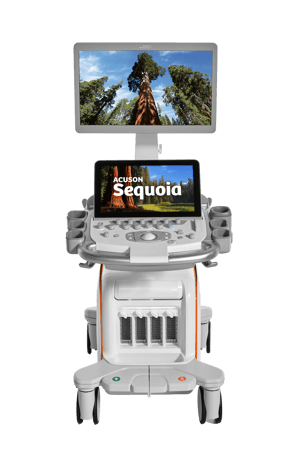 So much attention has been placed on improving the patient experience that it’s easy to lose sight of the sonographer’s comfort as well.
The rise of portable equipment means that sonographers are at greater risk for injuries related to twisting, pulling and lifting, an issue that’s exacerbated when sonographers neglect to take the time to change table height and adjust their own positioning.
You're reading Cassling's White Paper on Improving Ultrasound Ergonomics. Scroll down to read the complete report.
Prefer a PDF? Click the button to download now!

The good news is there’s been a number of ergonomic advances designed exclusively to accommodate the comfort of the sonographer, plus a number of small changes you can make to your own routine that can greatly reduce your risk of injury.
To make sure you’re limiting your strain as much as possible, keep these insights in mind.
Conduct a Worksite Evaluation
The first step is to take a look at your primary work area with an eye toward identifying those troublesome spots that could leave you prone to an injury of some kind.
This may be more complicated than it seems, particularly if you’re moving between work areas with a portable ultrasound machine or if some of the amenities in your facility are fixed and immovable.
Here’s a helpful trick to ease your burden for this task: ask your institution’s risk management or rehab department for their assistance. They can look at things with an eye they’ve acquired through years of training and research, pointing out issues that anyone else may overlook.
Once you’ve identified those problem areas, you can begin the process of actually fixing them with equipment designed to foster safety.
Here’s what that equipment will typically include:
These small, inexpensive contraptions are so important for reducing elbow strain. You don’t tend to think about the weight of the cord and transducer during setup, but it’s amazing how such a small thing can cause such severe wear and tear on your body over the course of time.
Elbow straps that allow you to wind the cord down your forearm can reduce the tension that develops from the constant awkwardness of a cord pulling down on the transducer and any other instruments. That relief can do wonders for your long-term musculature health.
These take the concept of the elbow strap even further by removing the cord entirely.
A cordless transducer that interacts via wireless technology with the ultrasound machine is truly the best ergonomic choice for your practice, and it has additional benefits as well. It eliminates the reaching and leaning necessary with a cord that’s always just a little…bit…too…short. Instead, you can focus more intently on the task at hand.
This one should be a no-brainer. When you can adjust the height of the table that your patients lie on during the procedure, you can bring it to an optimum level to reduce needless injuries related to bending and stretching. This will dramatically decrease the strain placed on your back, and it’s well worth the cost of investment if your facility doesn’t yet have such a table.
These are a life-saver for your feet, particularly if you prefer to conduct most of your procedures while standing. These cushy mats are placed on the floor in areas where you stand for long stretches at a time, making you far more comfortable. You’ll definitely notice the difference at the end of a long day.
And that’s just equipment. Regardless of the gear you have available, you also have additional options when it comes to protecting yourself.

Get Close to the Patient
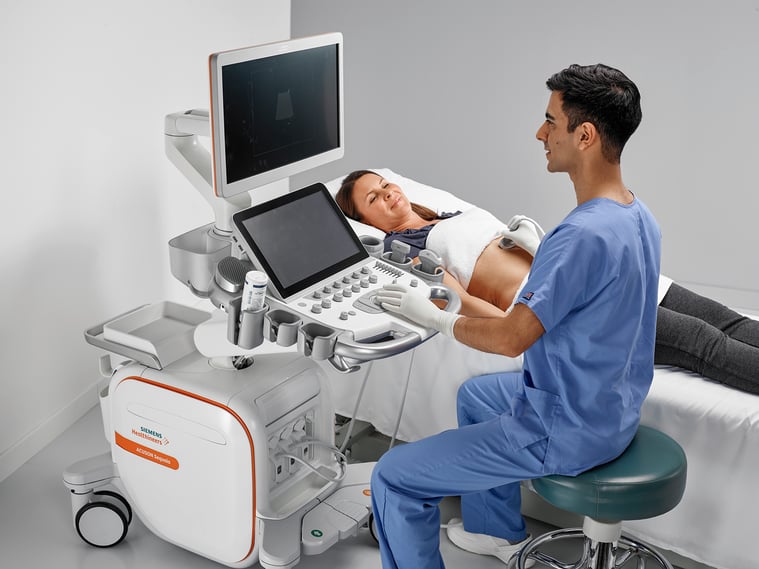
Don’t be afraid to get right in there. Raise or lower the bed height as necessary and move the patient closer to you on the stretcher. That way, you’re not bending your back, stretching your arm or putting unnecessary weight on your joints. It’s better to be comfortable than to be shy.
Take Time to Set Up Your Environment
This is one of those things that everyone tends to overlook when a dozen patients are waiting to be seen and you’re trying to move as fast as possible. Still, your body will thank you when you take a minute or two to create an optimum working environment.
Position the monitor so you can see it without craning your neck. With that complete, adjust the control console to a suitable position. Finally, adjust the stretcher height (if you can) so that you’re in the best position possible to conduct the procedure.
Reduce Arm Extensions
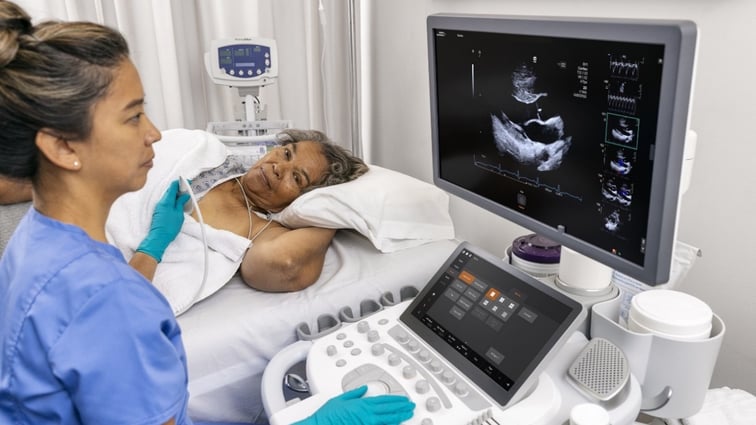
Here’s a handy tip that’s easy to put into action if you’ve invested in the aforementioned cordless transducer. Rather than reach across the patient, go to the other side of the patient to scan.
Your follow-up question is probably how to freeze images when you’re further than arm’s reach from the console. Easy: have a helper freeze and store the image. Or, if that’s not a possibility, invest in technology that lets you save the image without necessarily having to be at the console itself.
Take Care of Yourself Outside the Lab
Your behaviors outside the imaging facility can have a distinct effect on how you feel during your workday, and can even have an impact on your ability to do your job.
Smoking, poor diet and lack of sleep can contribute to a musculoskeletal injury, because all of these things reduce your body’s resilience to potential harm. When you eat right, exercise, and get the requisite eight to nine hours of sleep per night, you set yourself up to cope with the stress that comes from ongoing ultrasound work.
Proper Lifting Techniques
It may not be that common for you to be lifting patients themselves but, as we’ve already illustrated, it’s often those small things you probably don’t even think about that are causing real damage over time.
In any office, you’ll encounter situations where you’re moving equipment and other materials around. Even if you think the load is small, it’s important to exercise proper technique when it comes to lifting.
That means not bending your back. It means bending your knees instead while your back remains ramrod straight. It means steering clear of twisting motions in the middle of a lift and in general. Think smooth, confident movements over jerky, unsure ones.
Partner Up
One surefire way to reduce the risk of injury is to have assistance throughout your job. Lifting something heavy? Get someone to lend a hand. Imaging a patient? Have them freeze the image so you can stand on the patient’s other side if you need to. An extra set of hands can help reduce injury risk in numerous situations, especially on nights and weekends when you’re tired and can feel yourself taking safety shortcuts.
Evaluate the True Cost of Not Enacting These Polices
Perhaps the biggest obstacle sonographers run into when attempting to shift resources around or invest in ergonomically-friendly equipment is cost. But when you evaluate price in comparison with the potential cost of a serious injury, it becomes a lot easier to justify your investment.
Take a height-adjustable stretcher for instance. This can conceivably run you around $7,000, something that would create hesitation for a facility whose budget is already strained.
But consider this: without a height-adjustable stretcher, a sonographer can easily injure his/her back and miss 12 weeks or more of work—at the cost of $40,000 for a temp to be hired, plus potential disability payments and lost productivity.
When you analyze the cost in that way, that $7,000 doesn’t look nearly so steep.
Get Started Today
Upgrade to the latest ergonomically-friendly ultrasound equipment with help from Cassling! As an Advanced Partner of Siemens Healthineers, we can provide you with quotes on some of the most advanced, ergonomic ultrasound equipment on the market. Learn more about upgrading today!
Ready for product or pricing information?
Contact the local Cassling/Siemens PSE in your state.